Case study / Bonefoam

Two platforms. One migration. Search visibility worth protecting.

How Double Atari used crawl data, migration planning, and AI-assisted analysis to help bring Bonefoam's Webflow website and Shopify storefront together.

The challenge

Moving the website was only part of the job.

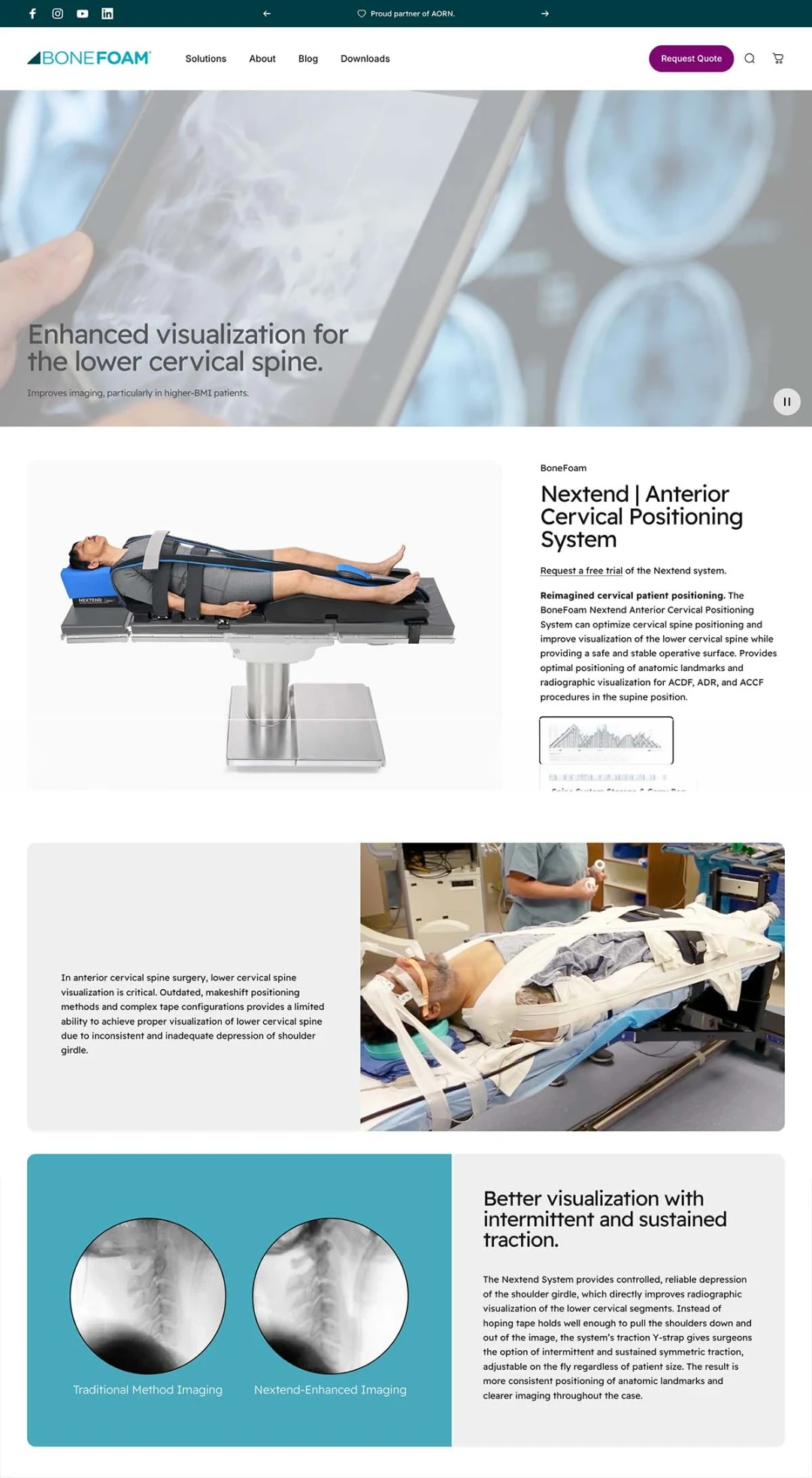
Bonefoam website, shown as a full uncropped screenshot
Bonefoam's website. The focus of this engagement was migration SEO and search readiness.

Bonefoam had a Webflow website at its main domain and a separate Shopify storefront on a shopping subdomain. Bringing them into one Shopify site meant more than moving copy and products. Existing URLs, indexed pages, product information, and measurement all needed attention.

My role was to help protect that search foundation through the transition. The question was not simply, “Does the new site look right?” It was, “Can people and search engines still reach the right content, and can we tell what changed after launch?”

That is where this project became a useful example of AI-assisted consulting. Perplexity helped me work through evidence and organize recommendations. Crawl exports, destination checks, and search data remained the reference points for decisions.

Scope: migration SEO, URL mapping, technical review, content recommendations, and post-launch monitoring. This is a story about the search work around the migration, not a claim that Double Atari designed or built the entire Shopify store.

The work

Start with what exists. Decide what needs to survive.

The migration plan connected the old site's content to the new site's structure, then gave the team a way to check the transition.

01

Establish the baseline

The starting point was a crawl inventory of the Webflow and Shopify environments. URLs, titles, descriptions, headings, and indexability gave us something concrete to compare against instead of relying on memory or a visual review.

02

Map the destinations

A working redirect map connected old URLs with appropriate Shopify destinations. Product, collection, and supporting content paths needed individual decisions. Sending everything to the homepage would not preserve the purpose of those pages.

03

Separate two redirect problems

The retired shopping subdomain and the old Webflow paths were different problems. The plan distinguished domain-level routing from redirects within the main website, including the need to keep the old hostname available to handle requests.

04

Review search-critical details

Technical review covered metadata, canonical signals, robots directives, sitemap coverage, and product structured data. The goal was to identify what Shopify already provided and where a fix or a more deliberate content decision was needed.

05

Make the content more useful

Recommendations considered product-page clarity, questions buyers need answered, and links between products, collections, and supporting content. SEO, AEO, and GEO were treated as related content problems, not three separate sets of pages.

06

Check what happens next

Post-launch review looked at old and new URLs, indexing, product markup, and search performance. Monitoring matters because a completed redirect spreadsheet does not prove that every redirect works or that every destination is indexed.

Where Perplexity helped

An analysis partner, not an autopilot.

I used Perplexity to help make the migration information easier to work with: reviewing the URL-mapping work, investigating technical questions, and turning findings into a prioritized set of next steps.

That changes where I spend my time. Instead of treating every export as an isolated document, I can ask what the crawl, redirect plan, and indexing reports are saying together. An apparent traffic change can become a question about reporting scope or URL consolidation before it becomes a claim about success.

The important boundary is verification. An AI-generated recommendation is a starting point. A redirect needs a destination check. A schema recommendation needs a review of the existing markup. A performance comparison needs equivalent dates and a clear definition of what is being counted.

This is the same approach I document in the Double Atari Search Lab: use AI to accelerate the work, then test the output against the website and its data.

What the work produced

A migration that could be reviewed, not just launched.

The practical outcome was a documented foundation for the transition: a crawl baseline, a working URL map, technical review findings, and a way to follow the new site's search health after launch. That made individual decisions easier to trace and remaining questions easier to prioritize.

It also created a clearer distinction between preserving existing visibility and improving it. Keeping important content reachable is one job. Making that content more useful, easier to understand, and better connected is the next.

This case study intentionally does not attach a traffic-growth percentage or revenue claim to the migration. A defensible outcome needs comparable reporting periods, consistent property coverage, and enough time after launch. Earlier growth should not be credited to later migration work.

For a similar project, I would measure redirect coverage, destination indexability, organic landing-page performance, and qualified actions. AI citations would be tracked separately rather than presented as an automatic benefit of adding structured data.

The takeaway

A platform change is a search project, too.

Bonefoam brought together the kinds of work that are often separated: content inventory, platform decisions, technical SEO, and measurement. The value was in connecting them before small gaps became difficult post-launch problems.

If your team is combining websites or moving platforms, start with a migration-focused website audit. Pair it with CMS and URL-structure planning, then use analytics and search reporting to understand the transition.

Have a migration coming up, or one that needs a second look? I can help turn the moving pieces into a practical plan.